Column · @fencingcompanyixur460
Best Fence Builders: Weatherproofing Strategies
A fence is supposed to do one job: stand there, look respectable, and keep doing its thing while everything else gets moistened, baked, moistened again, and periodically hit by a rogue mower. Weatherproofing is how you get a fencing that makes it through seasons as opposed to auditioning for the "previously" part of an after photo.
If you have ever viewed an all new fencing turn unsteady in a year, you currently know the punchline. The building contractor didn't "mess up." The contractor just treated weather condition like a tip. The best fence builders treat it like a customer with strong opinions that never ever stops revealing up.
Below are sensible, field-tested weatherproofing strategies that the best fencing companies, best fencing contractors, best fencing installers, best fencing builders, and yes, best fence companies and best fence contractors and best fence installers utilize to maintain posts directly, boards tight, and coatings looking deliberate rather than tired.
The actual adversary is water, not rain
Rain obtains the heading, yet water is the villain behind the drape. Wetness wicks right into wood with end grain and splinters, creeps under coverings, and attacks steel via little scrapes you do not see until they appear as rust freckles later.
Wind-driven rainfall makes it even worse. That splash at fence elevation can saturate the reduced rails and blog post areas that many people assume are "shielded." Sun after that dries the surface erratically, leaving dampness slopes that create bending, fracturing, and swelling.
The weatherproofing objective is straightforward to say and somewhat tougher to execute: maintain water out where it matters, and if it does get in, offer it a method to go out. That indicates managing contact points, handling water drainage, and making use of compatible materials so something does not screw up another.
Start with the message system, since every little thing hinges on it
People love boards, yet articles are the backbone and the vulnerable point. A fencing looks directly because the blog posts are appropriately set, plumbed, and secured. Weatherproofing begins with just how those blog posts take care of moisture, activity, and freeze-thaw cycles.
Post product options that affect longevity
Wood messages are timeless, but not all timber acts the exact same. Pressure-treated lumber stands up to degeneration, and appropriately defined posts lower the chances of soft rot near the ground line. Still, the change location where the post fulfills concrete or dirt is where many failures start. That is where you want added attention.
Metal blog posts can be great, especially in regions where termites are not the issue and deterioration is handled well. Coatings and proper caps matter a whole lot. Also after that, soil chemistry determines outcomes. If the ground is damp and mineral-heavy, corrosion control becomes non-negotiable.
Vinyl and composite systems can be weather-friendly, yet they do not get rid of the physics of movement. Temperature level swings make products broaden and agreement. The method is building with that truth in mind, utilizing posts and installations developed to tolerate motion as opposed to dealing with it.
The ground line is a wetness magnet
If you keep in mind one point, make it this: the post base is where water hangs around.
Common strategies made use of by seasoned best fencing contractors consist of:
- Using a post sleeve or physical splitting up strategy for certain designs so the timber is not straight showering in damp soil.
- Installing a gravel layer or drainage base where appropriate.
- Sealing or protecting the components that see the most moisture direct exposure, particularly end grain on wood posts.
If you skip these, the fence may look penalty for some time. After that, a period later on, you get leaning sections and inconsistent board spacing. Not since the boards fell short initially, but because the structure silently softened.
Concrete is helpful, unless you trap water versus wood
Concrete is a classic anchor and commonly needed for fencing stability. But poured concrete around a wood post can create a humid microclimate. If the design traps dampness, you have produced a cozy little decay zone.
For timber articles, numerous installers count on approaches that improve drain and minimize straight get in touch with at the wood-soil interface. That can imply using techniques that allow dampness to move far from the blog post or utilizing article caps and sealers appropriately. The specific "finest" setup relies on local conditions, frost depth, dirt kind, and exactly how the fence is designed.
In environments with freeze-thaw, the blog post needs a steady footing listed below frost depth. In environments without ices up, the post still needs security, just with a various focus on drain and degeneration resistance. The very best fence builders readjust strategy to the regional weather condition patterns as opposed to duplicating what worked in a neighbor's yard.
Placement and spacing: the weatherproofing you can not see
Even if your materials are perfect, negative spacing or bad placement invites problems.
Wind load is the tricky element. A fencing that is tight and well-braced holds up much better in tornados. A fence with gaps that enable air movement where it trusted fence installer ought to resist it can experience greater flex, which creates bolts to loosen and boards to rub.
Also, boards mounted without appropriate spacing can trap wetness between them. That trapped water accelerates discoloration and can add to surface area checking or bending over time, specifically with strong boards exposed on both sides.
This is where experienced best fence installers gain their maintain. They do not simply "affix boards." They think about how the fencing will drop water, exactly how the framework will certainly deal with gusts, and how materials will reply to temperature and humidity.
Rails, caps, and trim: treat them like safety armor
People usually think of securing the posts and boards, after that forget rails and the sides where water collects.
Rails regulate exactly how water flows across the fence. If rails sit in a manner in which enables water to pool at their ends or if the layout blocks water drainage, you get localized saturation. In time, that is where you see the coating deteriorate first.
Post caps and leading rails assist in 2 means. They lower straight water impingement and they shield completion grain or vulnerable edges. End grain is dehydrated. It drinks moisture like it owns a vineyard.
If you are making use of timber, selecting trim and caps that fit snugly and are secured where they fulfill is a tiny detail that repays. On steel, appropriate caps prevent water from sitting inside blog post tubes.
Weatherproofing is usually "monotonous" work, however the uninteresting work is what keeps the fence looking intentional for years.
Sealing and finishes: compatibility issues greater than brand obsession
The web has plenty of solid point of views concerning tarnish types, paint brand names, and whether sealers are "worth it." In reality, compatibility defeats hype.
A couple of concepts deserve complying with:
- Surface prep is not optional. Dirt, mildew, old coating deposit, and flaking coating avoid bond. If the finishing can not bond, it will stop working faster than you can claim "next spring task."
- End grain and cuts need therapy. A board looks secured on the face, however completions can still be bare unless you apply defense there.
- Don't coat over entraped wetness. If the wood is damp or the previous covering trapped water in place, securing can lock dampness in and develop blistering or uneven aging.
Many pros utilize a timetable that matches the conditions, not simply the schedule. Warm sunlight, seaside moisture, and hefty rains alter just how promptly completes weaken. A surround complete sun can dry and fracture. A fence in consistent shade can remain moist and establish mold. That is why 2 "the same" surround 2 lawns can wind up with really different outcomes.
If you work with best fence companies or best fence contractors, ask just how they manage surface area preparation and finish compatibility. Their response should seem like functional workflow, not a sales pitch.
Wood-specific weatherproofing techniques that really stop failures
Wood is a fantastic material. It is additionally an honest one. It will show you what you did not take care of well.
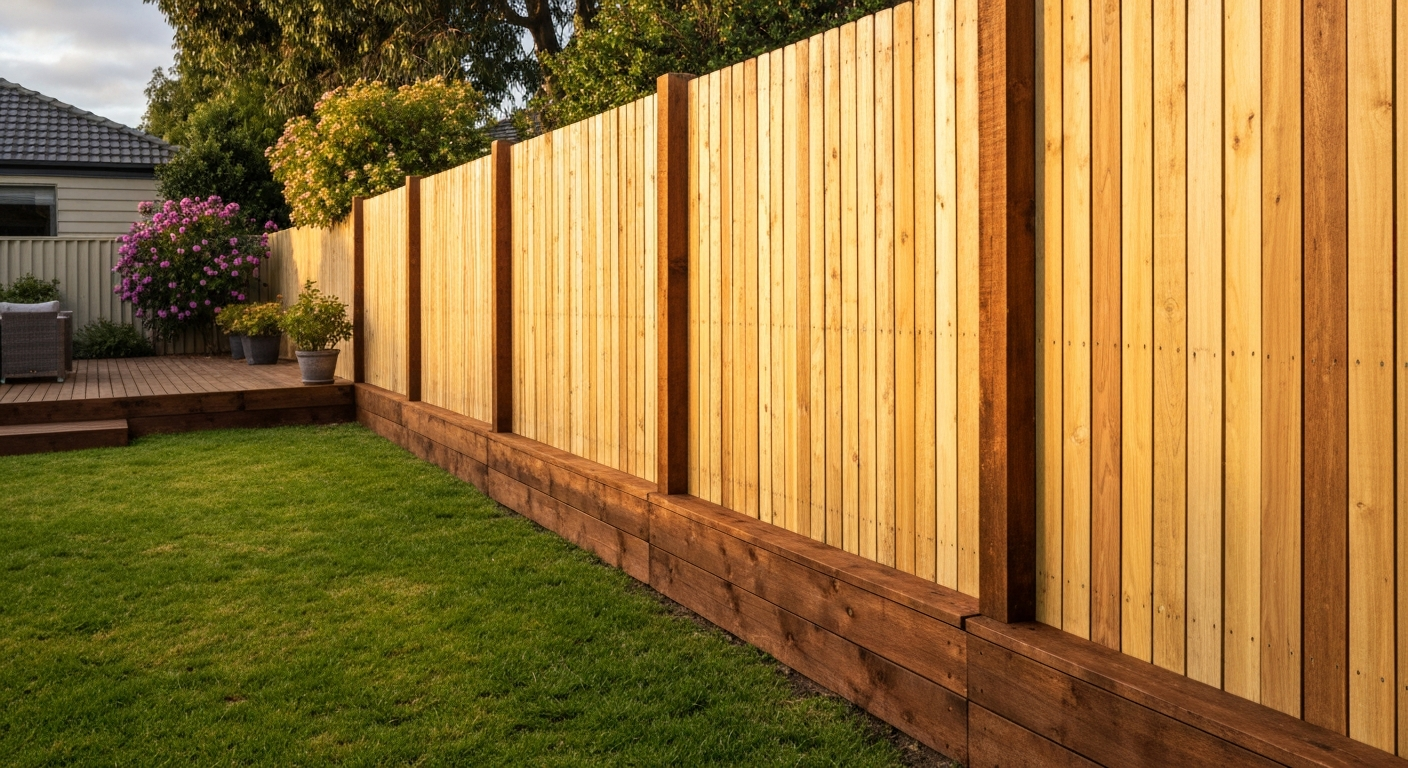
Treating end grain and cut points
The ends of articles and rails are frequently the earliest failing factors due to the fact that they expose porous cells. Pros commonly treat the ends and any type of cut factors with protective products before setup. After installation, touch-ups may be needed at bolt penetrations or where the finish was damaged.
Using appropriate fasteners
Weatherproofing is not just "waterproofing," it has to do with corrosion resistance and steady links. For outside use, pick bolts made for treated lumber and suitable with the finish system. If metal fasteners wear away, they increase, tarnish the wood, and loosen the link. Loosened links cause activity, which results in a lot more water direct exposure and sped up finish wear.
The best fencing builders make use of exterior-rated hardware and use the exact same frame of mind to every connection factor, not simply the apparent ones.
Ventilation and water drainage behind the fence
Solid fences develop air flow reduction. If water gets in the structure and can not dissipate, it stays. A fencing that is developed to decrease water trapping performs better. This is specifically appropriate for fences with lattice, strong panels, or closely spaced boards where runoff patterns can change.
A pro will certainly consider just how water streams when it hits the fencing face, where it lands, and whether the layout encourages drain instead of holding water in pockets.
Metal and composite considerations: weatherproofing without false confidence
Metal fencings commonly get treated like they are "set it and neglect it," however weather still attacks.
Corrosion control is the huge offer. Scrapes during installation can become rust initiators. That is why cautious handling and ideal touch-up finishings issue. If the steel is powder-coated, the covering is a strong protective layer, yet it still requires intact sides and reduce points sealed or shielded according to supplier guidance.
Composite and plastic systems can withstand degeneration, yet they are not unsusceptible to fading or bending from heat. Additionally, the sustaining structure still requires to take care of wetness and activity. Weatherproofing a composite fence frequently boils down to building a long lasting substructure and handling water around posts.
In other words, weatherproofing is less about the fencing product being "tough" and extra regarding just how the system is put together and protected.
Bracing and article deepness: toughness becomes part of waterproofing
Wind shakes fences. Shaking causes scrub factors. Rub points use coatings, damage finishes, and loosen fasteners. That transforms mechanical stress into weather damage.
Post deepness influences security, which influences how much the fence relocates throughout storms. Activity indicates joints open and close, which allows water to function its means right into areas that would otherwise stay dry. Even excellent finishes stop working much faster when the underlying structure is frequently flexing.
When contractors speak about supporting, they are not just discussing "holding up." They are discussing minimizing the type of movement that transforms weatherproofing into a short-term hobby.
A fast reality-check on "maintenance-free" promises
Any installer who tells you a fencing is maintenance-free is marketing optimism. Weatherproofing decreases upkeep. It does not get rid of it.
What you can manage is the timing and the expense. A sturdy fence might need cleaning and minor touch-ups, but it must not call for board substitute every couple of years. The most effective fence installers and best fence contractors prepare for lifecycle treatment, since that is what maintains fences from coming to be expensive surprises.
If you desire a genuinely low-maintenance fencing, focus on layouts that reduce water get in touch with at joints, utilize compatible finishes, and include caps and trim from the beginning. Then comply with a standard care rhythm: wash away grime and address covering concerns early.
What weatherproofing appears like on a jobsite (a lived example)
I once saw a staff mount a wood fence late fall, the type of weather where everyone aspires to conclude prior to the sun disappears. The posts were established plumb and the boards festinated. However the team dealt with the bottom side like it was optional.
Within a period, the lower sections started to reveal discoloration and softening around the ground line. It was not dramatic on day one. It was gradual. The fencing still stood, however the "healthy" bolts started to loosen up, and the boards changed a little. That change created brand-new voids, and those spaces offered water a path. By the following wetter stretch, the fixings were larger than they must have been.
The repair was not just "change a few boards." It was attending to the dampness access factors, boosting the security near the bottom, and doing much better on seal and coating insurance coverage around at risk areas. Weatherproofing is rarely one solution. It is a chain of small right choices.
That is why clients who pick the most effective fencing companies commonly obtain a calmer, extra foreseeable end result. The difference is not magic. It is disciplined detail.
Two weather scenarios, two different priorities
Not all "negative weather" is the same.
In hefty rainfall regions, runoff administration and sealing at joints are essential. In freeze-thaw areas, article deepness, drain, and minimizing water trapping around messages and bases matter a lot more. In coastal locations, corrosion resistance and finishing toughness are top priorities.
If you tell a service provider, "I obtain storms," that helps, however it is not nearly enough. The useful questions are much more specific:
- Is it wind-driven rain or consistent rainfall?
- How wet does the ground remain after storms?
- Any freeze-thaw cycles, and how deep is frost commonly?
- Is your fence exposed to lawn sprinklers or watering runoff?
- Is the lawn in full sun or mostly shaded?
The best fencing installers deal with these concerns like component of the develop, not a sales survey.
A short checklist for weatherproofing decisions
If you wish to talk like someone who understands what they are doing when you hire the best fence companies or best fence contractors, keep this short checklist in your pocket.
- Confirm blog post security where timber fulfills concrete or soil, with a drainage-aware approach
- Use exterior-rated, compatible bolts and seal any type of cut points
- Choose a surface system with real surface area prep, not just "clean it and paint"
- Add caps or cut to stop water merging on end grain and message tops
- Design for overflow and airflow so water does not get trapped behind the fencing
That is not a warranty of perfection, but it guides the task away from one of the most typical failure paths.
Troubleshooting: when a fence begins stopping working early
Even with solid craftsmanship, time takes place. Weather is consistent. If something starts to drift, catching it very early stops complete replacement.
Here are the indications to focus on and the common weatherproofing instructions for each.
- Loose posts or shifting areas often suggest inadequate ground depth, disintegration around bases, or connection hardware that is wearing away
- Dark streaks near all-time low can point to moisture wicking, trapped water, or layer failing at the ground line
- Cracking or splitting boards generally appear first on end grain or near cuts, implying missed sealing or incompatible surface timing
- Rust spots on metal frequently begin at scrapes or unsafe cut edges, adhered to by coating failure
- Warping or turning can be brought on by wetness discrepancy, entraped water, or airflow restrictions behind a solid style
When you see these early, the solution is generally smaller and cheaper. Waiting is what turns "change and seal" into "replace and reconstruct."
Why "ideal" home builders think in systems, not solitary materials
It is alluring to search for the solitary finest board, the most effective stain, the most effective message, or the best lock on eviction. Real weatherproofing is about system compatibility.
A finish that is wonderful on smooth cedar may execute differently on pressure-treated lumber that has various wetness actions. An equipment selection that is best for one covering could promote discoloration or deterioration in an additional environment. Concrete positioning that supports a message might trap moisture unless water drainage and separation are considered.
The best fencing builders layout for exactly how water steps, exactly how products age, and exactly how the fencing responds to stress over time. That is why clients typically request for the "best fence builders" even when their budget is "great." The difference turns up later on, when you are not spending weekend breaks doing repair work because the fence developed into a weather condition experiment.
Choosing amongst fencing pros: what to ask, and what to listen for
You can do a whole lot with concerns that require clarity. Below are the ones that reliably separate mindful specialists from fast talkers. (And no, you do not require to seem dramatic. Simply calm and specific.)
Ask how they manage blog post bases, since that is where weatherproofing starts. Ask what bolts they make use of, and whether they deal with cut points. Ask whether they seal end grain on wood and exactly how they safeguard the bottom area of posts. Ask just how they prep surface areas prior to discoloration or painting, and what their upkeep expectations are.
Listen for useful answers. Great contractors will certainly speak about water drainage, air movement, and material compatibility. They will certainly also acknowledge that weatherproofing is not magic, it is a plan, and prepares need great execution.
The reward: fencings that age like they belong
A fencing is one of the few outdoor features that individuals notice daily. It frameworks patios, marks borders, and changes just how your lawn feels. A well weatherproofed fence ages more beautifully. Color fades in a controlled method. Boards stay aligned. Blog posts do not silently lean. Equipment holds.
The weatherproofing strategies defined here may seem like a lot of little information, and that is due to the fact that they are. Climate does not attack with one large strike. It resolves joints, sides, and exposure factors. That is why the best fencing companies and best fencing contractors win with interest to the monotonous components that most people never ever see.
If you treat your fence like a system, not a pile of materials, you end up with the important things you really desired from the start: a fence that deals with the projection with confidence, not excuses.